TAGGRS at MeasureCamp Amsterdam 2026
How to make Server-side Tracking profitable? And when choosing it over Google Tag Gateway? Here’s what we presented at MeasureCamp Amsterdam 2026.

Head of Marketing
4 min read

MeasureCamp Amsterdam is one of those events we look forward to most in the calendar. No vendor keynotes, no managed agendas… just analysts, marketers, and tracking specialists in a room, proposing their own sessions and talking openly about what’s actually working in their day-to-day practice. This year, as silver sponsors, TAGGRS didn’t just attend: we had 2 speakers on the floor, covering topics that sit at the centre of what we build and what we talk about with agencies every day.
Here is what we brought to the stage:
- Ate Keurentjes, Head of Marketing presented How to build a sustainable business model around Server-side Tracking
- Niek Schlepers (a.k.a. Niek Schapers on the session board), co-founder and Head of Support discussed The Server-Side Dilemma: GTG or sGTM?
Here’s what we covered and where to go if you want the full picture.
The atmosphere: what MeasureCamp Amsterdam got right
The un-conference format means the agenda is built on the day by the people in the room (sometimes with their own name written in slightly creative spelling on the session board).
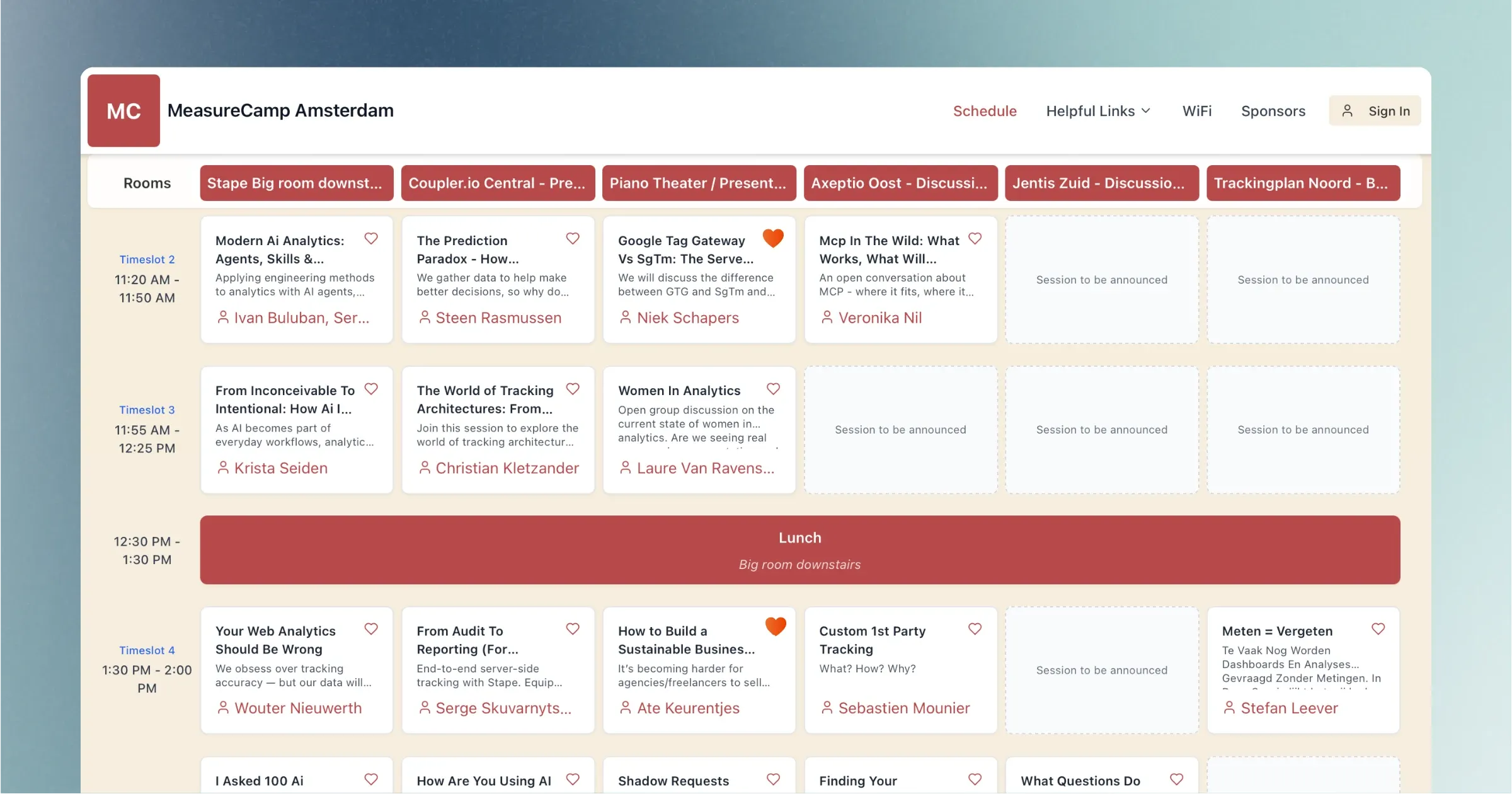
The themes that kept surfacing this year were very familiar to us: the growing complexity of consent environments, the pressure AI-driven ad platforms put on data quality, and the widening gap between agencies that treat tracking as a commodity service and those building it into something more durable. Both of our presentations sat squarely in that territory.
Session no. 1: Building a recurring revenue model around Server-side Tracking
We recently launched our new partner program, which is already supporting 800+ agencies worldwide, to become the growth enabler of performance marketing teams. So, talking about the profitability of Server-side Tracking at the MeasureCamp Amsterdam was a natural fit. That’s why Ate presented on the commercial gap between agencies that deliver a Server-side Tracking setup and move on, and those that have structured it into a proper, recurring service line.
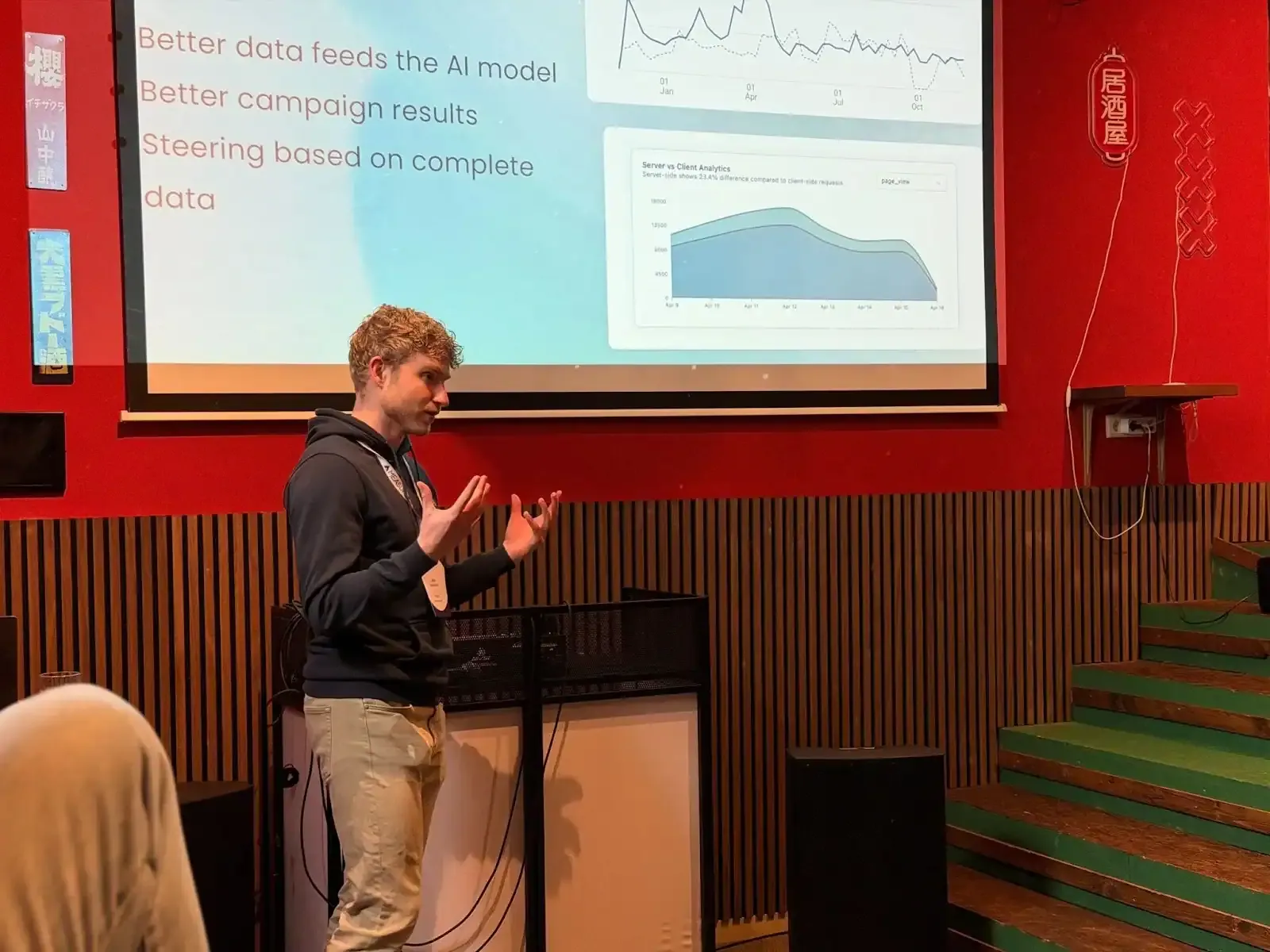
Ate Keurentjes walking the room through real server vs. client-side analytics data: a 23.4% difference in page_view events that most clients never see.
The session walked through:
- 3 revenue streams that stack on top of the initial implementation: ongoing optimization, proactive monitoring, and hosting margin
- the operational pitfalls that erode profitability when agencies try to build this without the right structure in place.
The numbers behind the model make the case clearly: a single client on the full stack generates over €10,000 in Year 1 revenue, with the recurring portion growing from Year 2 onwards.
Session no. 2: Google Tag Gateway or server-side GTM?
Niek tackled a question that comes up in many implementation conversations we have: should you use the Google Tag Gateway, or does server-side GTM make more sense for this client?
Both approaches address the same core problem: tracking signals being blocked before they reach ad platforms, but they do so differently, serve different platform mixes, and produce meaningfully different results in terms of data recovery. Niek kept the room engaged with a live quiz format, asking attendees to guess the average raw uplift from sGTM before revealing the answer from our own client data. (Spoiler: it’s 16-21% on average according to a baseline of 2,000+ clients!)
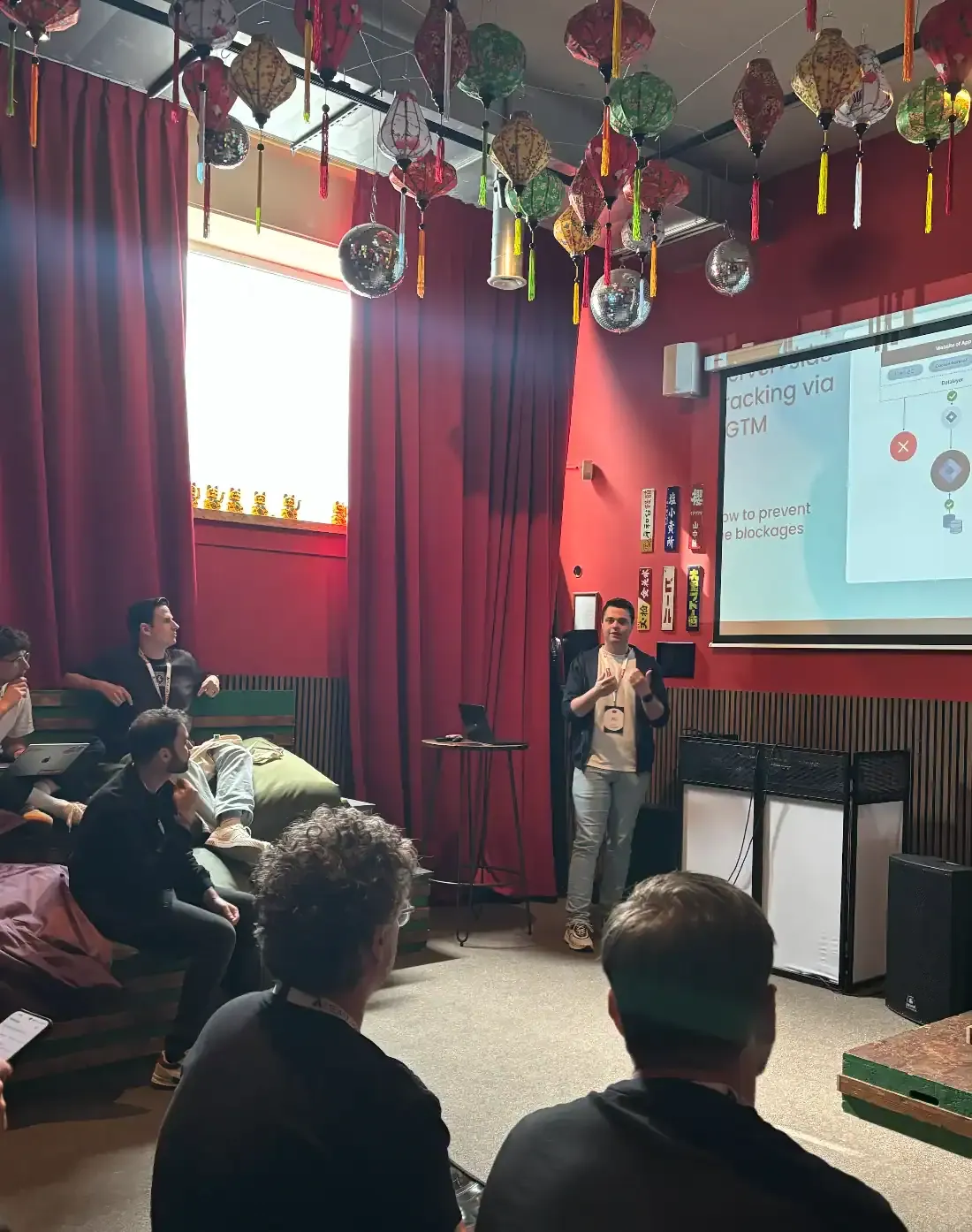
An engaged room during Niek’s session: the GTG vs. sGTM question clearly resonated.
The practical conclusion: GTG is faster to set up and works well for Google-centric stacks, while sGTM delivers significantly higher data recovery across multi-platform environments. The architectural detail, the uplift figures, and the decision criteria all deserve their own treatment. That article is coming shortly: we’ll link it here as soon as it’s live.
What we’re bringing back
The conversations after both sessions reinforced something we see in our own client work: the practitioners building the most resilient measurement setups are the ones who think about tracking as infrastructure. Not a project to deliver and close, but something to monitor, maintain, and evolve as the platforms and consent landscape around it keep changing.
That’s the work we do at TAGGRS, and it was good to be in a room full of people who feel the same urgency around it.
If you were at MeasureCamp Amsterdam and want to pick up any of these threads, or if either session raised questions you’d like to explore, reach out to:
- Ate at ate@taggrs.io
- Niek at niek@taggrs.io.
Happy tagging!
About the author

Head of Marketing
Ate Keurentjes, now Head of Marketing at TAGGRS, initially joined the company as Marketing Specialist in August 2023. With deep expertise in Server-side Tracking, SEO, and data-driven marketing strategy, he leads initiatives that enhance TAGGRS’ online visibility, user engagement, and conversion performance. By analyzing industry trends and leveraging advanced optimization techniques, Ate drives impactful marketing campaigns that accelerate the company’s growth.


